
A permitted install, done to the design
Septic work usually starts one of two ways: you're building on a parcel with no sewer, or an existing system has failed and it's holding up your life — sometimes literally holding up a real estate closing.
Either way the sequence is the same. Application to the health department, soil evaluation on the site, a system design that matches what the soil can handle, permit issued, install, and a county inspection before anything gets backfilled.
What's included
- Walked through the county permit process so nothing stalls
- Coordination of the on-site soil evaluation
- New system installation for new construction
- Full replacement of failed or failing systems
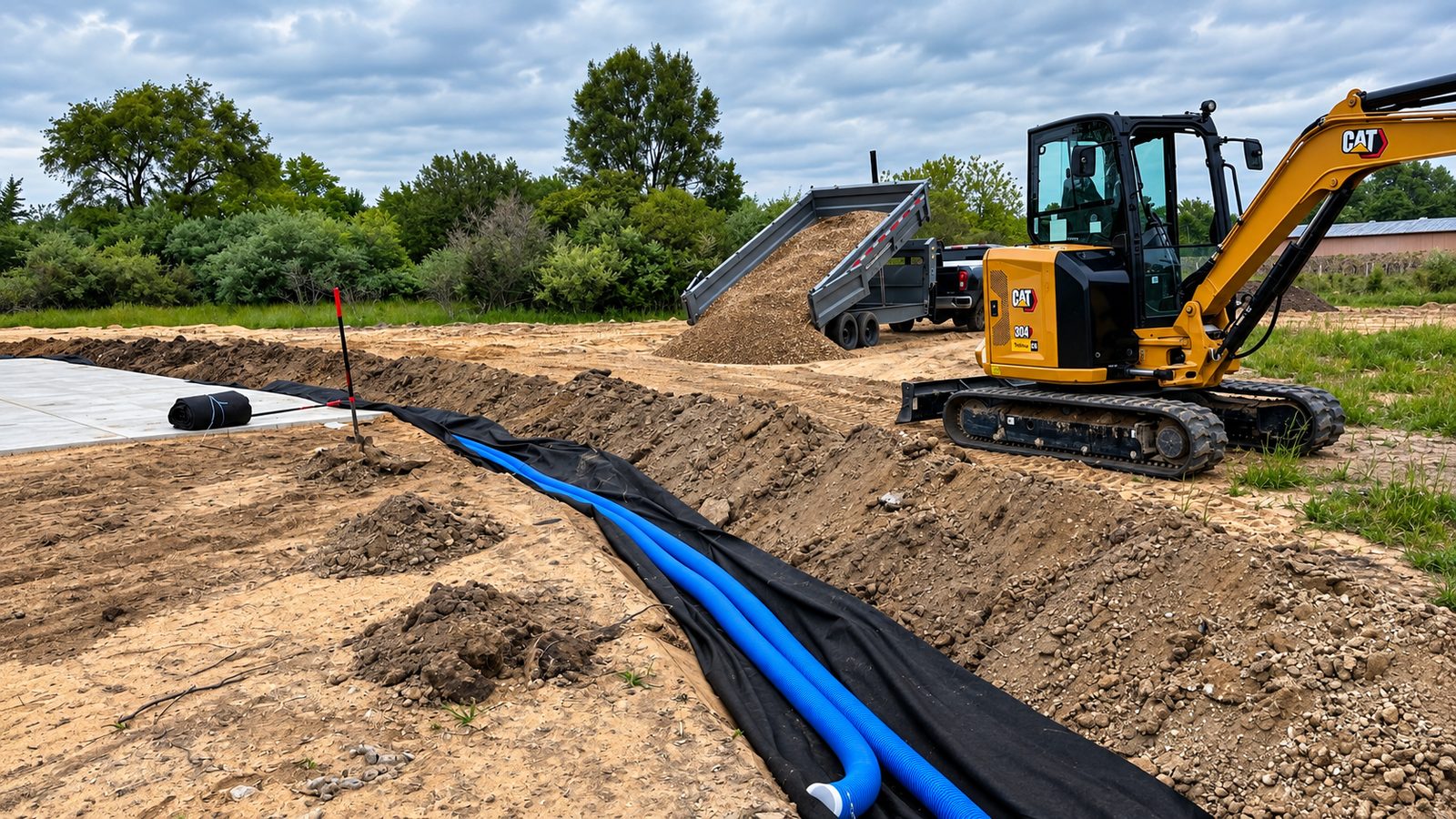
- Tank, drainfield, and distribution installation to the approved design
- Site restored and graded after the county's final inspection
Berrien County writes its own septic rules
Michigan has no statewide sanitary code. Each county health department sets its own requirements, which means a system that would be approved one county over may not be approved here.
Two Berrien County specifics worth knowing:
- Under the county's sewage disposal ordinance, no one may construct, alter, extend, or replace a system without a permit from the health officer — and the county inspects during construction, before backfill.
- Lake Michigan properties require a 200-foot setback, where the state minimum for Great Lakes shoreline is 150 feet. On a shoreline lot, that single number can decide whether a system fits at all.
Setbacks from wells, property lines, and surface water all get checked at the evaluation stage. Finding out a lot won't perc is bad news, but it is much cheaper news before you own the land than after.
Common questions
It varies with the season and the health department's workload, and the soil evaluation has to happen before a design can be reviewed. Spring is the busiest stretch. Call and we'll tell you what the current turnaround looks like.
Call directly and say that. Failed systems on a pending sale get triaged differently than a planned replacement, and there are usually a few options depending on how much time the closing gives us.
It depends almost entirely on the soil evaluation. A conventional system on good draining soil and a mound or engineered system on poor soil are very different jobs. We quote after the evaluation, when we know what the site actually requires.
Either the property owner or the contractor can file with the health department. We'll confirm exactly who is handling what in writing before work starts, so nothing falls between the two of us.
Get a quote on your septic systems
Tell us where the property is and what you're trying to do with it. We'll come look, and the estimate is free.
Other services
Ready to get dirt moving?
Tell us about the property and we'll come look at it. Estimates are free, and we'll tell you straight if the job needs a permit before anyone touches the ground.